
🔥FIRE SALE🔥 No. 11
The ~old money~ aesthetic 💶, global cultural negotiations 🌏, and how to look like you hoard wealth 💰🖼🏇🛩

Perhaps the American fascination with wealth or, more specifically, with aristocracy comes from the unique differences (perceived as deficiencies) we have from our ancestors in England. We come up with terms like ~old money~ and ~new money~ to assuage our embarrassment about our short and unsophisticated history. Like Christopher Newman in Henry James’, The American, we by nature have a shortage of taste, an unseemly optimism, and are assertive of our position in the world while being completely clueless in regard to our standing. We fashion ourselves from a place of contradiction, if not confusion.
146 years after The Atlantic’s serialization of The American, I am scrolling through videos on my phone at the rate of twenty TikToks a minute, obliterating my brain’s ability to pick up a Henry James novel, let alone read one. Because I have an interest in menswear, and even if it is bad, the algorithm sends me what can only be described as carousels of 2015 Pinterest photos presented as fashion advice. The account, Oldmoneycore, with sixty-one thousand followers, garnered some vitriol last week for being clueless in a distinctly TikTok manner. The account posts, “Jobs that SCREAM ⚜️OLD MONEY⚜️? Ambassador.” Followed by photos of Angelina Jolie addressing the United Nations. Or…”How the ⚜️OLD MONEY⚜️spend their time? Playing polo. Hunting. At Yacht clubs. Masquerade parties. Attending diplomatic events.”
Comments on Oldmoneycore point out the confusion inherent in the posts and how the clean and saccharine version of old money they depict is uncanny and misses the mark. So what is the ~old money aesthetic~? On TikTok, it isn’t exactly about actual wealth. You won’t find the stealth wealth brands like Loro Piana, Brunello Cucinelli, or The Row and their exorbitantly expensive basics. They aren’t dropping names like Astor, Vanderbilt, Carnegie, or Rockefeller. There is a pervasive boyishness or softness in the men depicted in these posts. While “old” is the operative word, youth, especially white youth, unencumbered by class restrictions, is what is considered seductive in this aesthetic. The boys and men that are the dominant avatars of the old money aesthetic resemble aughts-era Hollister models. They are juvenile but not immature. They are exuberant but not fratty. They enjoy leisure activities like skiing and sailing, not video games or Fanduel. They wear straight-leg white pants, a breezy linen shirt, and Air Force ones (?). I suppose compared to the global airport lounge sweatpants elite, this seems like Brooks Brothers or Saville Row, but don’t be fooled. They are Talented Mr. Cornballs.
Why has this cheapened old-money aesthetic remerged? Is it part of the preppy revival? Is it the manifestation of our anxieties about a looming recession? While that may be a factor, I think it has more to do with global trends in how the wealthy, or the aspirationally wealthy, have decided to flash their cash. It is similar to the online fascination with traditional architecture. It is a rejection of the new cultural power centers' influence and an assertion of “taste” as a defense mechanism.
A similar exchange happened during the transatlantic cultural negotiations of the American Gilded Age. New wealth in the east has driven the oil-rich and the CCP monopolists and their newly minted bourgeois to LVMH’s flashiest offerings that are seemingly high class but often come off as garish. Though, there has been a backlash – a reclamation of western opulence, no matter how off the mark or misguided.
But ultimately, what makes the old money aesthetic on TikTok strange and inexact is a demonstrative misunderstanding of how the aristocracy fashions themselves. The sartorial choices of the old money aesthetic online are decidedly polished and glittery instead of old and understated. When I think of “old money,” that oppressively limited made-up phrase, I think of the Ivy League set in America or the Sloane Rangers of the United Kingdom. Their style has a disheveled quality comprised of expensive hand-me-downs. They might say, “Oh, this Chanel skirt? It used to be my mother’s,” or “Ah, yes, this Hermés scarf was just in the back of my grandma's closet,” or “This thing? It’s actually a blazer my dad got at J. Press when he was at Yale.” Their faux modesty operates as a secret code to communicate a certain discretion that makes the old money style amorphous, their class difficult to ascertain, and their rank ultimately unattainable. The old money style is difficult to pin down by design and is almost undoable for someone from outside a particular class stratum. Its unwritten code is impossible to emulate because it is illusionary.
So how do you style yourself like the moneyed class? How do you become undetectable in the finest chateaus, villas, and estates around the world? It’s important you acquire those luxe hand-me-downs, faux modesty, and a healthy dose of entitlement. It doesn’t matter if you have to buy, borrow, or steal.

Lady Spencer was THE Sloane Ranger when Peter York and Ann Barr wrote their humorous guide, The Official Sloane Ranger Handbook. She defined this new generation of aristocrats that elevated their grandmother’s English and French essentials with a wink and a disengaged affect. This cable knit jumper will help you channel those early Diana days – less revenge dress and more school teacher.
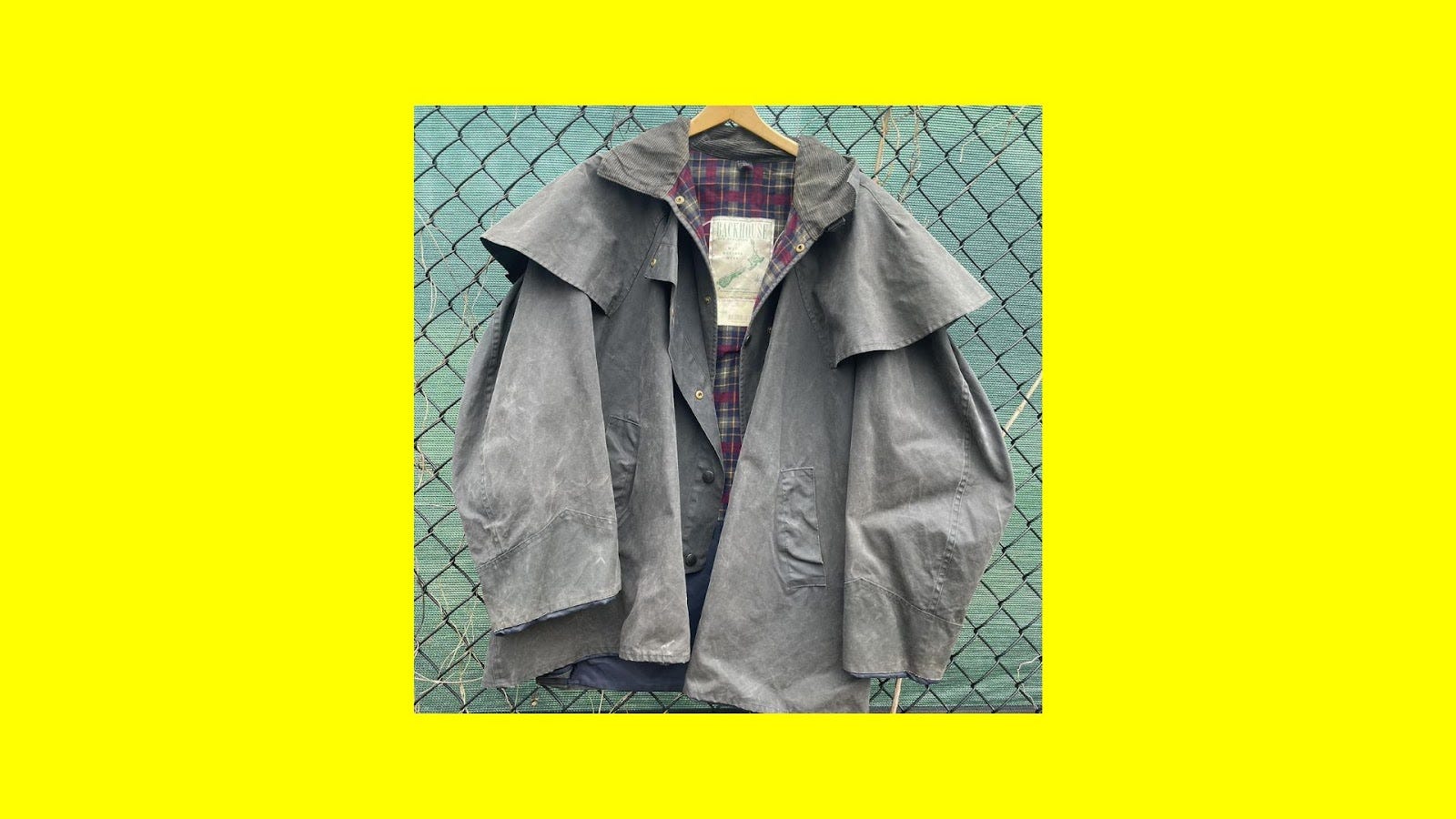
The Barbour is an undeniable emblem of the aristocratic class. In my neighborhood of New York City, I see men donning Barbours as a way to distinguish themselves from the newest yuppie residents. As technology, especially fintech, becomes an omnipotent economic force in the city, the Barbour is a way to signal a refined palate against the oppressive utility of the gorped out bankers. I’d opt for this unique wax jacket from Backhouse, a former Barbour subbrand based in New Zealand. Perfect for sheep farming or a flooding subway.
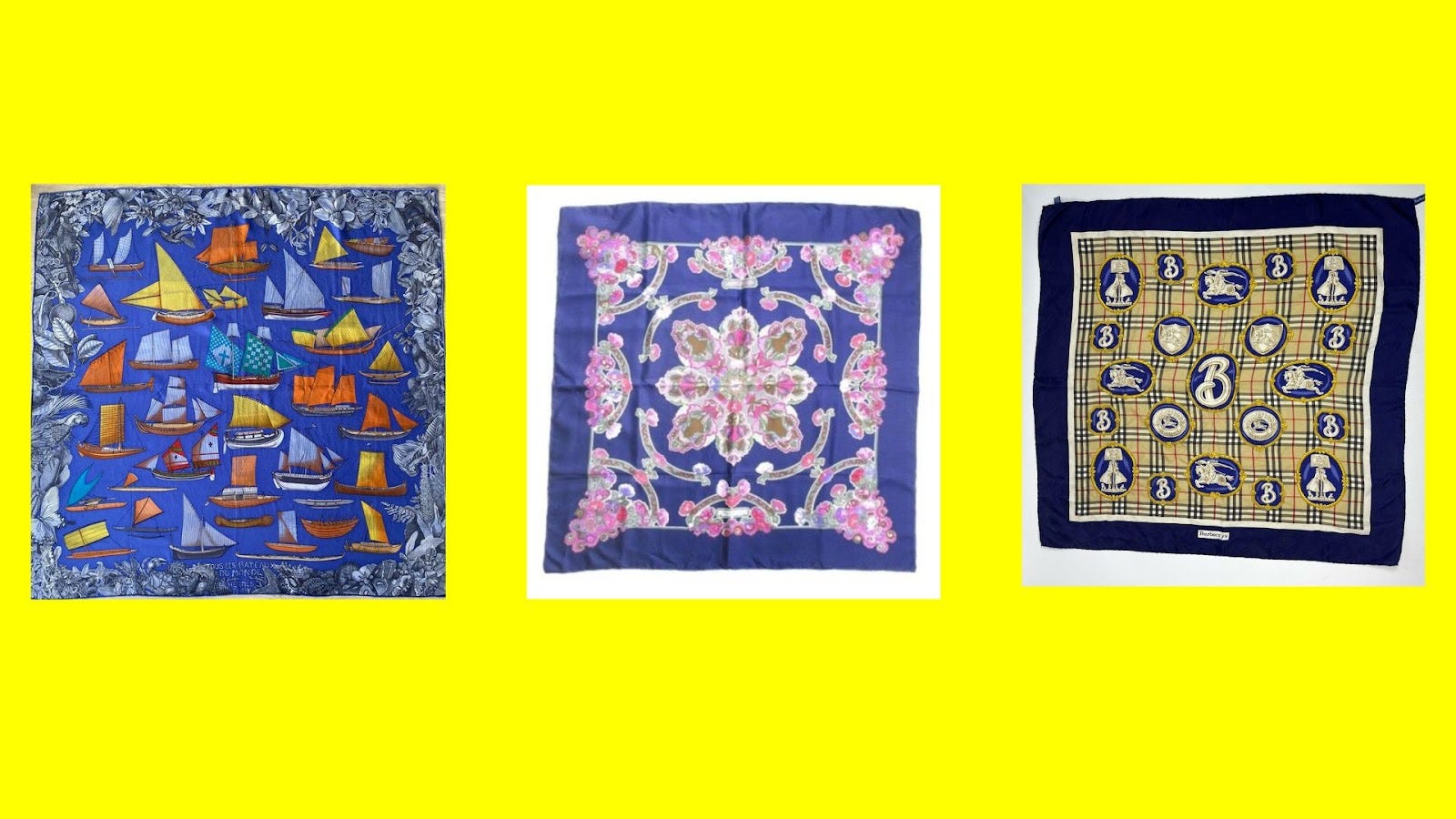
The statement silk designer scarf has been rising in popularity for some time. Think ASAP Rocky’s babushka or the spike in demand during the pandemic. Hermés is unquestionably the king of the form and has thousands of unique patterns. These two, one adorned with boats of the world, and the other with a beautiful pink and blue floral pattern, are among my favorite. I am personally coveting this vintage Burberry scarf decorated with multiple different logos from the company's history. This scarf is a hot item given Daniel Lee’s reintroduction of the '‘Equestrian Knight Design” at Burberry.
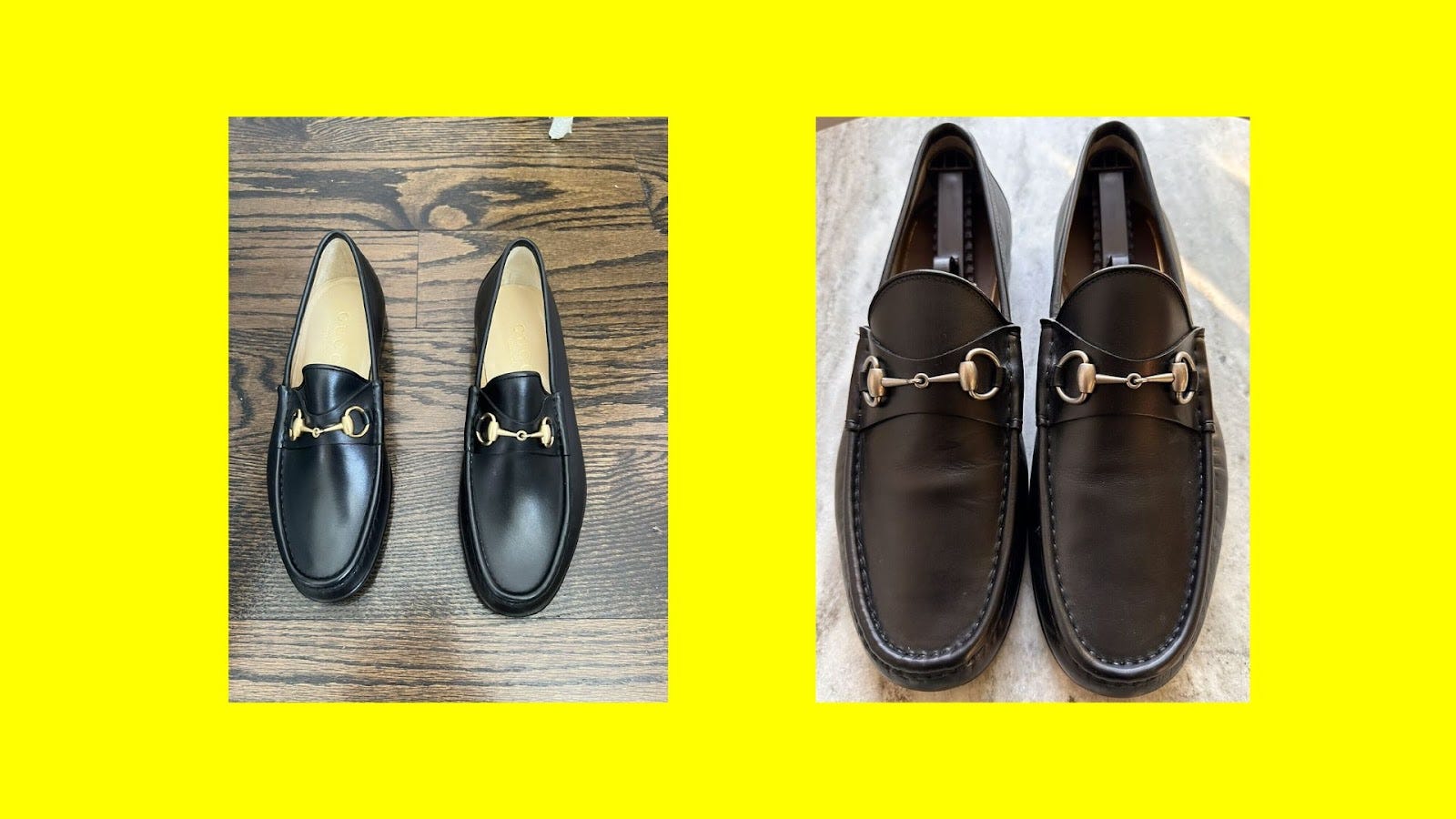
I saw some discourse online this week about whether or not Gucci could be considered “old money.” As I watched the debate go off in the menswear guy’s mentions, I started to understand the true meaning of an otherwise terrible movie. The debate at the center of House of Gucci is a matter of taste. The family debates whether expanding the brand, taking the company public, or introducing money-making accessories will tarnish its reputation. I don’t know what the answer is ultimately, but I do know that understated well made Italian loafers, like these Gucci horse-bit loafers, are eternally desirable for the privileged.
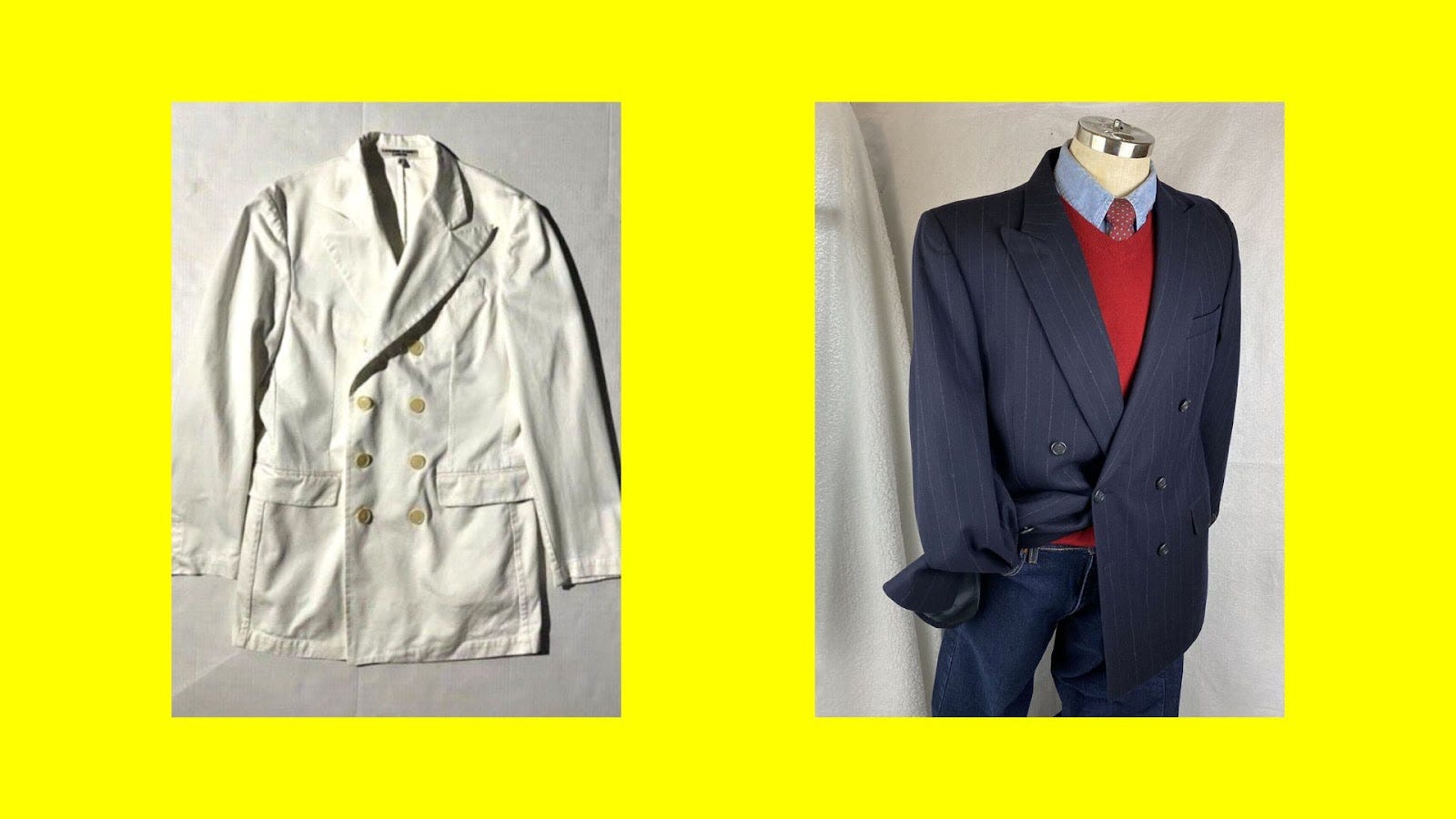
The double-breasted blazer is the bread and butter of some of the best and worst-tailored men in the world. On the one hand, there is King Charles (are we really going to call him that?), whose jackets are perfectly draped, and are surprisingly slouchy. On the other hand, we have the creatine creatures who think a skin-tight suit will transform them into Conor McGregor. Charles isn’t someone I’d model myself off of in most circumstances, but in the case of the double-breasted blazer, he’s worth emulating. These two from Katherine Hamnet London and Burberry are great starting points for someone interested in dressing like they have an ancestral seat.
Finally, here is a link to the documentary, Born Rich by Johnson & Johnson heir, Jamie Johnson. The film features frank and brutally honest interviews with Ivanka Trump, Georgina Bloomberg, S.I. Newhouse IV, and Kaiser Wilhelm II’s great-grandson. They’ll try to convince you how bad they have it. The poor babies 😢