
🔥FIRE SALE🔥 No. 26
🇬🇧 British skinheads, 🇫🇷✊ French anti-fascists, and 🇺🇸 JSOC operators 🪖

Two cultural items came across my desk last week. One was the extremely badass French documentary Antifa: Skinhead Hunters, directed by Marc-Aurèle Vecchione (2008). The other was the extremely haunting and depressing, deeply reported nonfiction book The Fort Bragg Cartel: Drug Trafficking and Murder in the Special Forces by journalist Seth Harp (2025).
Aesthetics are one of the most prominent political battlegrounds in the country. Antifa: Skinhead Hunters offers a solution to the emerging fascist aesthetic and how it can be co-opted by right-wing freaks, ultra-nationalist weirdos, and all around bad actors, while The Fort Bragg Cartel lays plainly how the JSOC (Joint Special Operations Command) “operator” who was given free reign to murder, mutilate, and traffic heorin while the American government turned a blind eye has supplanted our previous American idol and keeper of the Empire on the frontier – the cowboy.
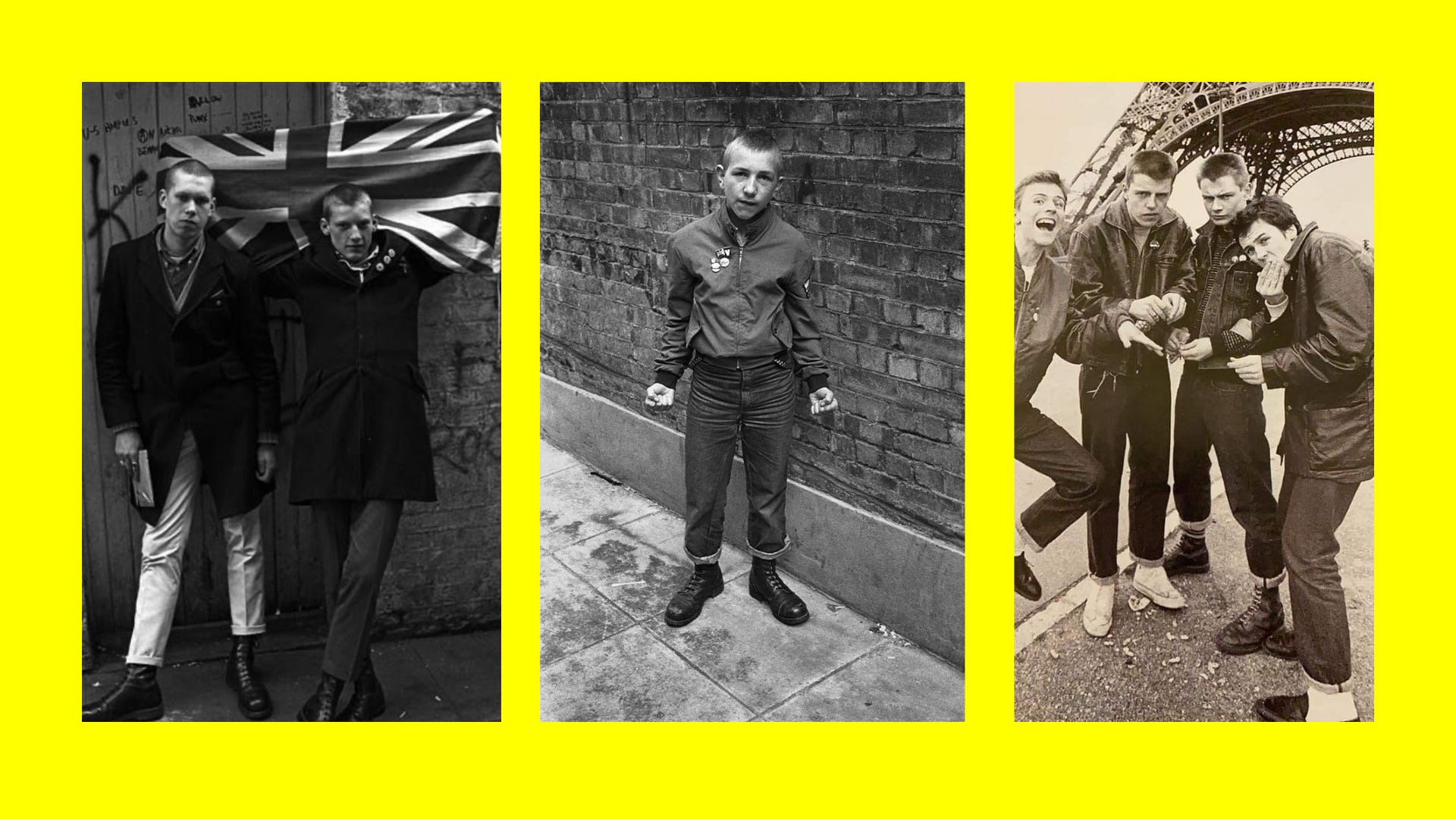
Firstly, let’s track a brief (and admittedly simplified) history of skinheads. The subculture emerged from the mods of the 1960s, characterized by a distinct working-class background and an interest in ska, reggae, and rocksteady. These were hooligan boys who idolized Jamaican rude boys, a population that was immigrating to the UK at a steady clip at the time. They embodied a rockabilly aesthetic – black leather boots, bomber jackets, straight-leg jeans, and, of course, a close haircut.
Okay, cool, so they are just badass punky working-class boys up for some good old-fashioned mischief, petty crime, and vandalism. Not too bad. Enter the National Front – the fascist response to the dying English empire of the 20th century. All of a sudden, football hooligans become racist cells, and swastikas and confederate patches adorn those same bomber jackets (read Among the Thugs for the best portrait of this development).
What Antifa: The Skinhead Hunters tracks is the response of young Frenchmen to the rise of the National Front in their own backyard, as it jumps across the channel. The two main groups featured in the doc are the Ducky Boys and the Red Warriors. The film interviews anti-fascist rock bands and members of the gangs to recount their response, rise, and success in fighting back against the racist Jean-Marie Le Pen cultural and political movement.
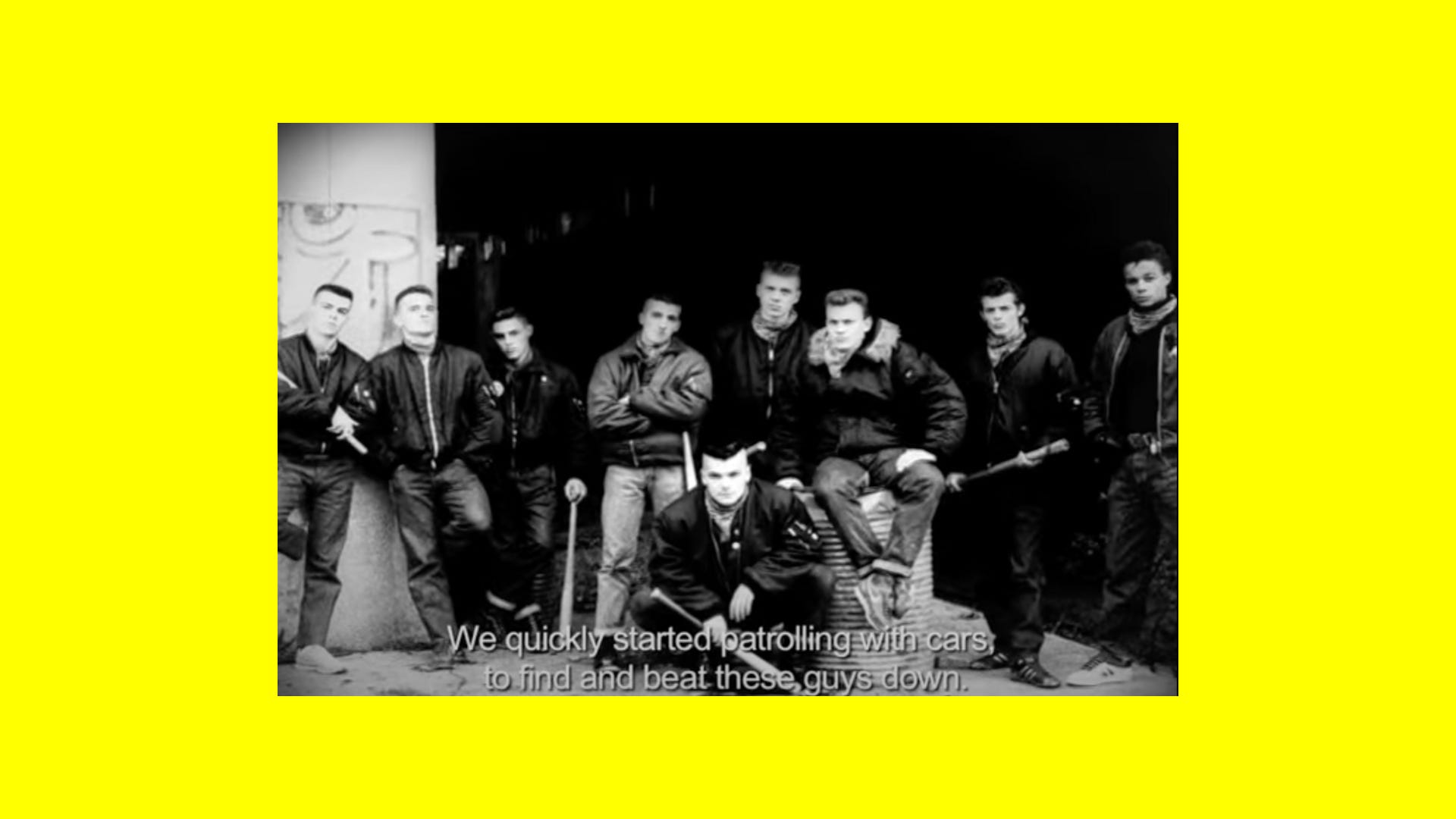
So what do the Ducky Boys and the Red Warriors do? First of all, they enlist every guy in the neighborhood with training in martial arts, which are many, and start providing security for bands with a similar inclusive and left-wing ideology. They raid fascist nightclubs with baseball bats and fists, and patrol the streets, but they don’t give up their skinhead aesthetic - one that was originally associated with anti-authoritarian rebellion and had been co-opted by the worst of France’s citizenry.
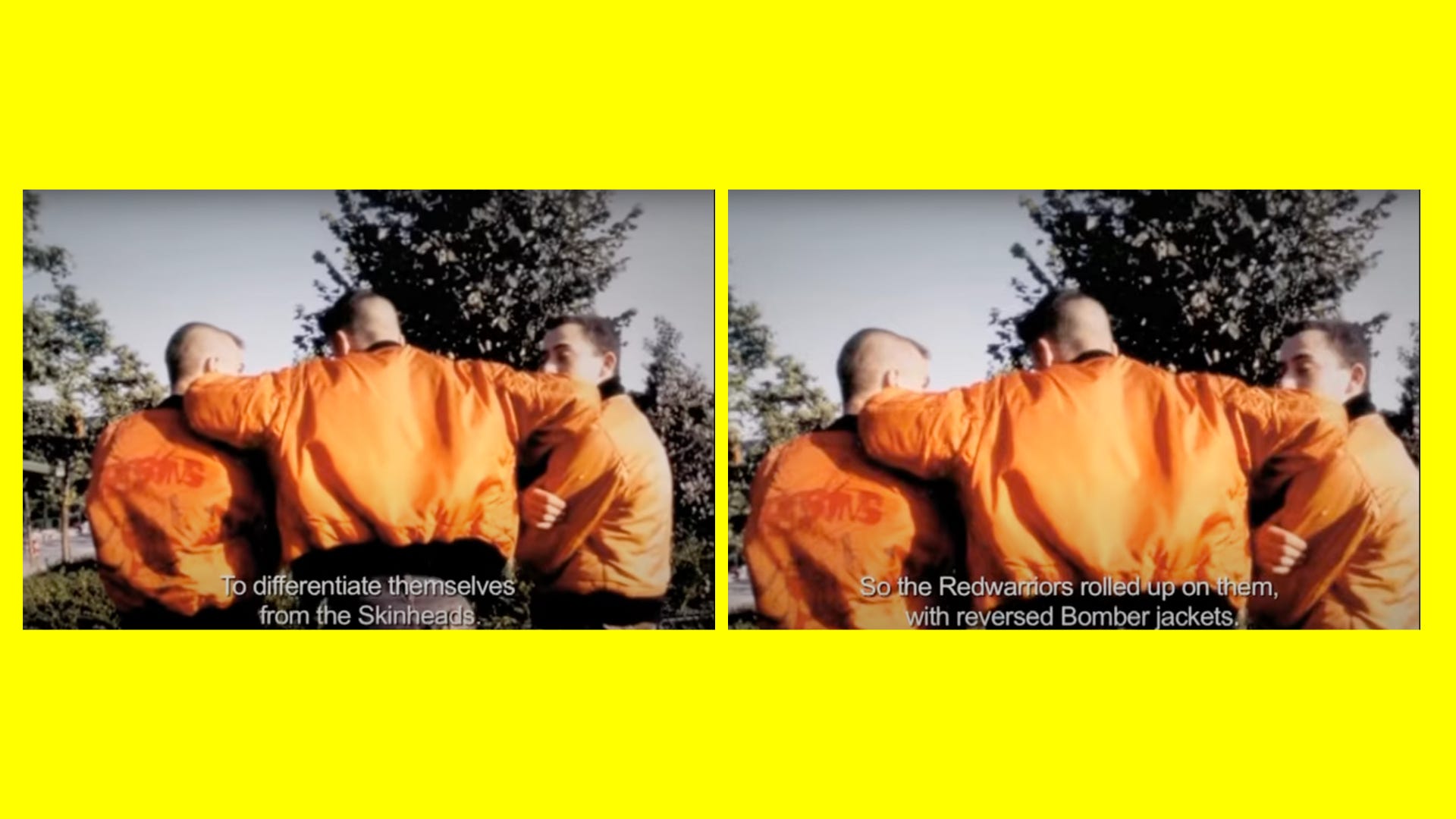
They have minor aesthetic differences and offer more variety and inclusion than the far-right skinheads. They have mahogany boots and sneakers instead of uniform black boots. American flags adorn their bombers instead of an Iron Cross or Nazi emblems. Perhaps most importantly, they flip their jackets inside out, revealing the orange lining of the bombers, before a raid on a fascist club, to differentiate themselves from the white nationalists.
The Ducky Boys continued to evolve the style and opted for a bit more individuality and differentiation. They still had the hallmark items and symbols of a skinhead, but there was latitude in their rockabilly aesthetic to include people of color, women, and anybody who wanted to bash a fascist's teeth in. Below is a photo of them in Paris – some are going full Fonz, while others have a more laid-back normcore look and feel. They’re happy warriors staying within the lanes of their aesthetic, but have leeway to oscillate between being a hard ass and having a kind vibe. Meanwhile, the National Front is an entirely homogeneous block – a manifestation of their ideology.
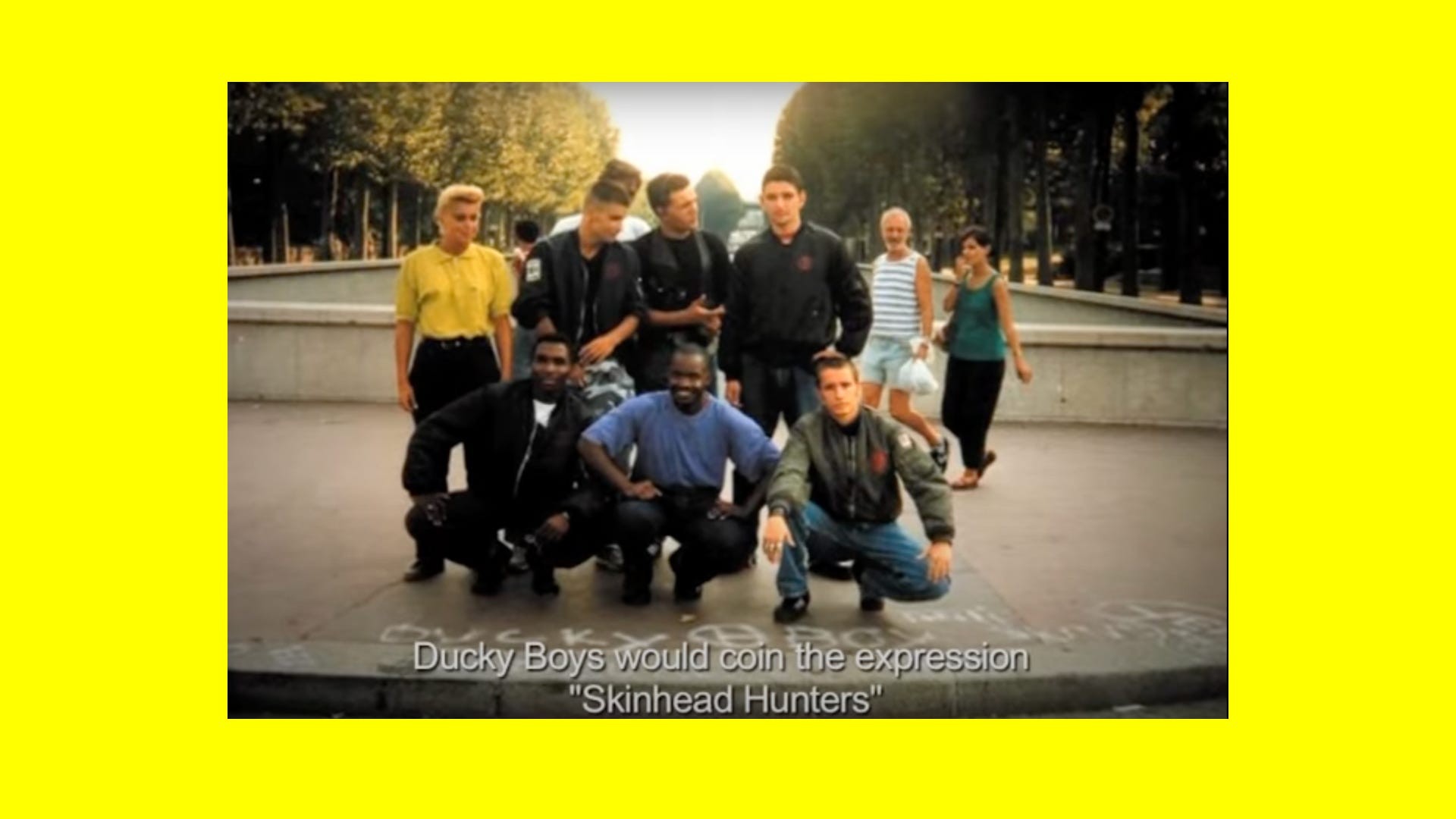
So what are the big takeaways aesthetically from Antifa: Skinhead Hunters? For me, it's that the right does not have a monopoly on “looking hard as hell” and that often co-opting a right-wing aesthetic and allowing room for experimentation makes for a sick counter aesthetic. A lot of politics fall along aesthetic lines these days, and perhaps always have. What the Red Warriors and The Ducky Boys demonstrated in France is that you don’t have to just subject yourself to the right wing when they come barging in and stealing your swag. You can take a stand and come right back at them with a cooler look (and maybe some brass knuckles), reclaim your look and the ideology that it used to represent.
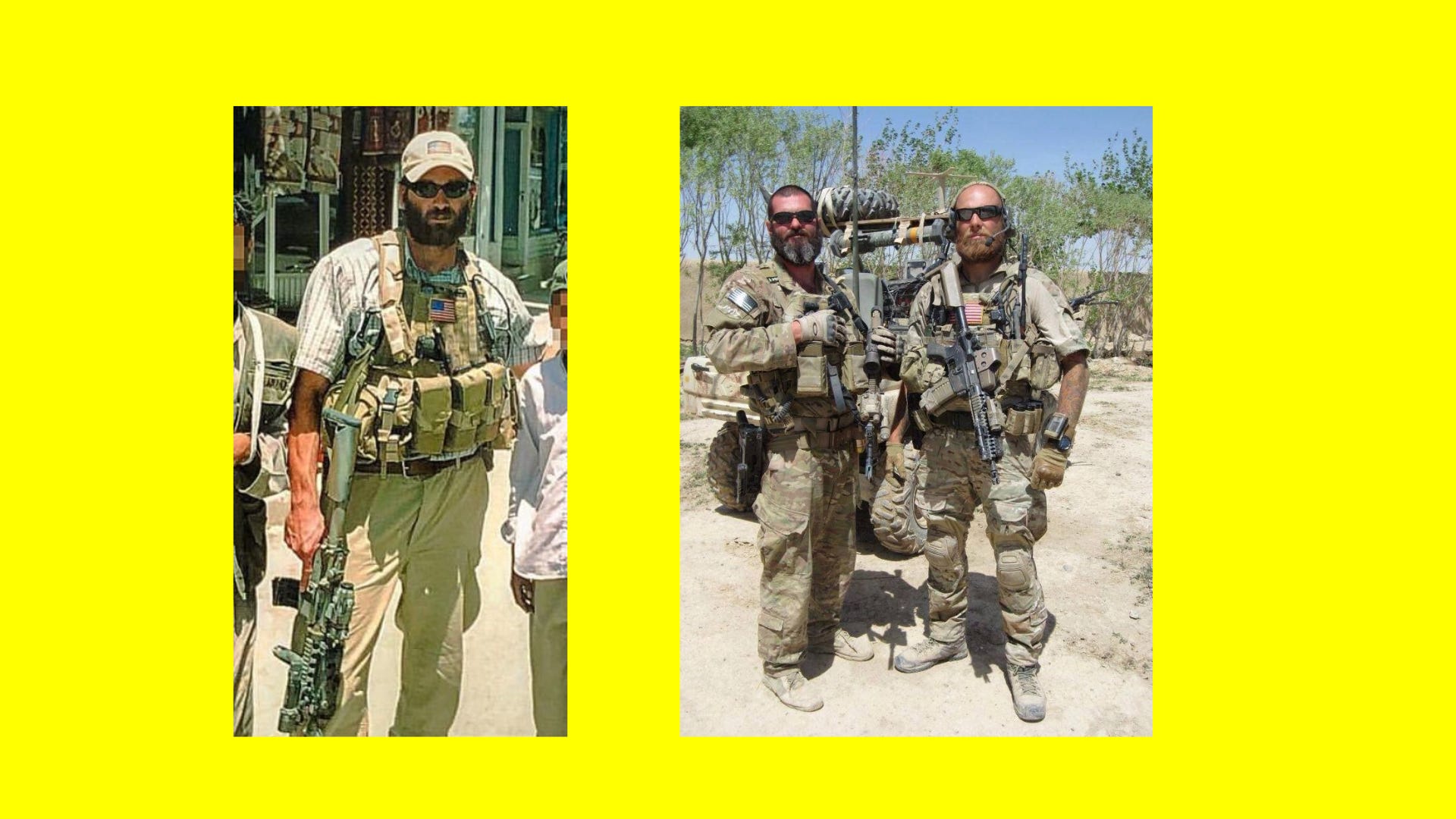
Which brings me to Fort Bragg. Harp’s book chronicles the insane ongoings of the most ruthless of “warfighters” (as Hegseth calls them) and their behavior both in country and at home. What becomes clear is that the United States, via JSOC, has a hit squad that consistently breaks international law, runs through Afghanistan like the damn Hell’s Angels, and has individuals that link up with Mexican cartels when they return home and their ravenous addictions need feeding. It’s sad. A lot of these guys were just trying to serve their country, and the requirements of their job (mass killing) pushed their psyches into dark places. From 2020 to 2021, Fort Bragg had 105 deaths – just four were in combat zones. The rest were overdoses and suicides.
This brings me to the ~ aesthetic ~ which we all know very well because of Kathryn Bigelow and Mark Wahlberg. These are not your clean-cut troops from the 20th century. They’re bearded, dripped in desert camo, absolutely jacked, don wrap-around Oakleys and tactical vests. It gives me no pleasure in saying this – they do look cool. Harp has touched on this in interviews. He really sees “the operator” as the modern replacement to the cowboy. There are frontier figures taming the wilds of the Empire, and their savagery supposedly matches their enemies. In a country going through a so-called masculinity crisis, it is not surprising that people look to adopt this look to emulate the operators and to assert their own minuscule amount of masculinity and perceived agency.
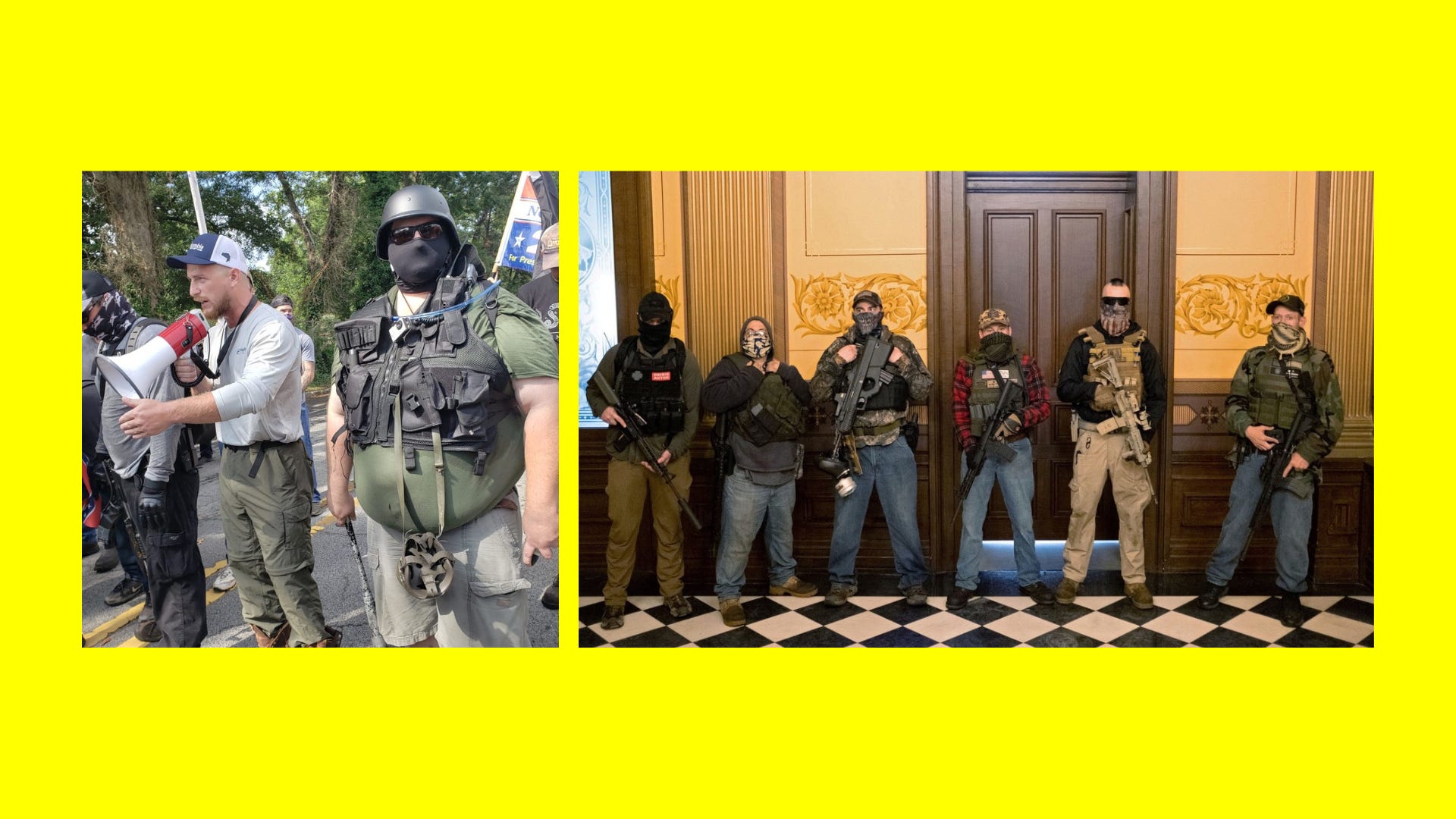
Above are the copycats – fake tough guys dressed for a warzone where there is none. A bunch of Kyle Rittenhouse’s looking for a reason to pull the trigger. Stolen valor types who the real killers, members of JSOC’s Delta Force, would certainly think are a bunch of feeble wet blankets who wouldn’t last a second in a real theatre of war.
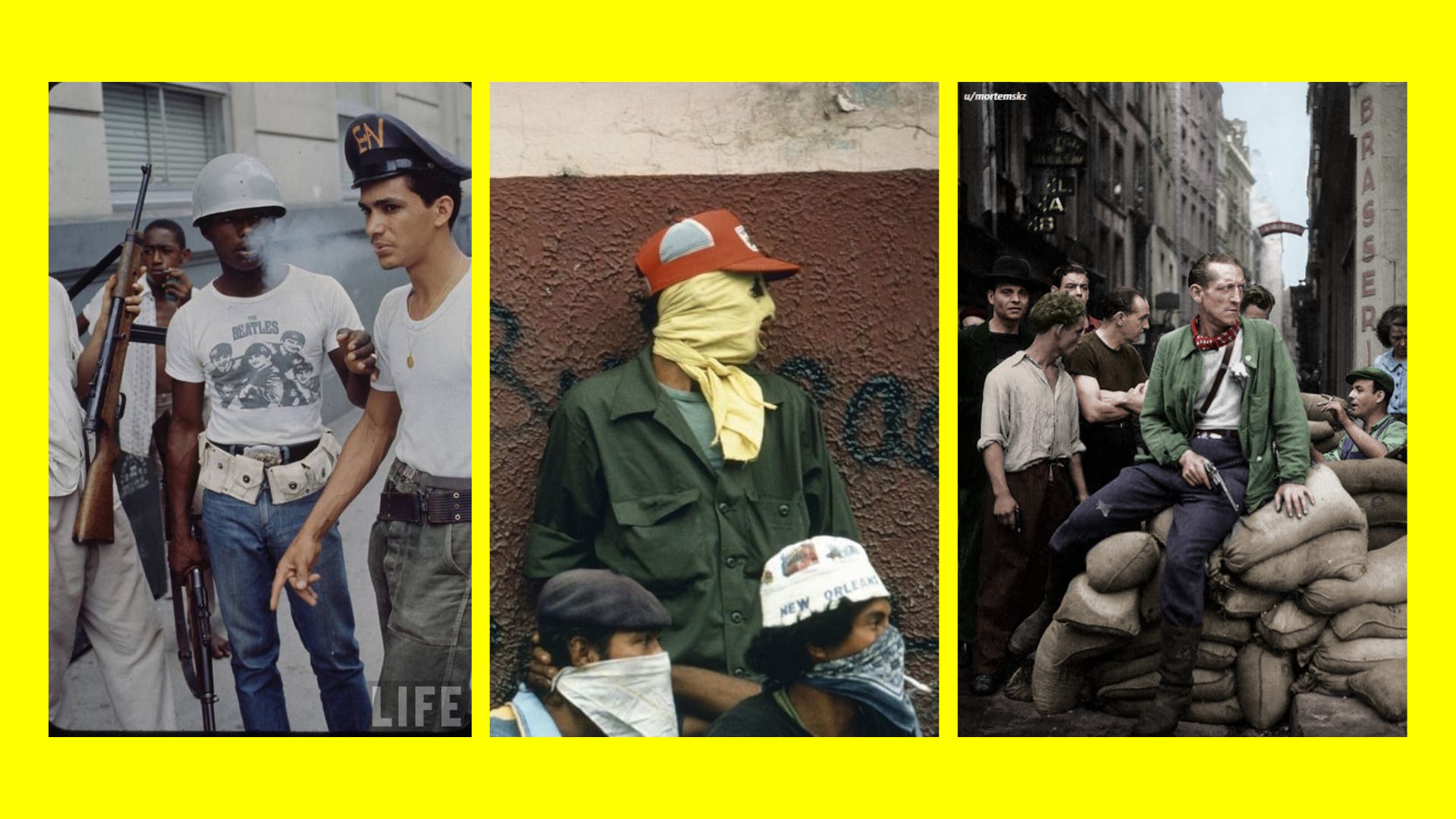
I don’t have a specific prescription from all these observations, but I just like to call into question what lefty guys are wearing. Are we really just going to do the labubu-Sally Rooney performative male uniform? I’m not suggesting we ‘roid up and enter a Tucker Carlson masculinity documentary, but throw on the fatigues and bomber jackets and cause some trouble. Below are some resistance fighters to get the creativity flowing.
JSOC/Delta Force Operators represent a brutal and uncompromising ideal of American freedom. This is pure darkness, though, and is only made real by one's own willingness to inflict soul-destroying violence on other individuals. It’s the mad freedom that can be found in the nightmarish frontiers of Cormac McCarthy’s Blood Meridian. In an American moment where autonomy feels like it is in exceptionally low supply, cosplaying as an operator can give one a sense of control and freedom. As the saying goes, “dress for the job you want, not the job you have”.